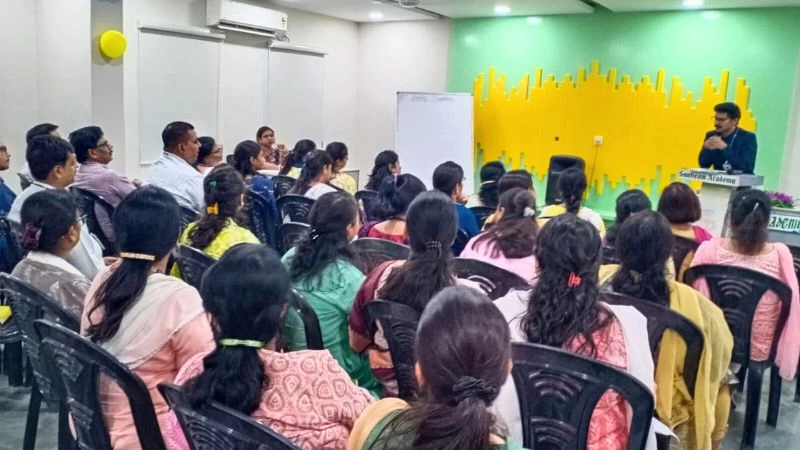
Have you ever sat across from your child’s teacher and wondered, “What should I ask?” Maybe you felt proud while hearing about your child’s strengths. Maybe you felt a little worried about the areas that need work. Both feelings are completely normal.
A parent-teacher meeting (PTM) is not a test for you or your child. It is a chance to work as a team. When parents and teachers talk openly, children get the same support at home and at school, and that helps them grow in studies, friendships and confidence.
At Sunbeam Academy, we see every PTM as a shared conversation about what is best for each child. Here are the most useful questions to ask teachers so that your next meeting is clear, calm and helpful.
Why Are Parent-Teacher Meetings Important?
A teacher sees your child for several hours every day. They notice how your child learns, how they behave with friends and how they react when something feels hard. You see a different side at home. When both views come together, you get the full picture of your child.
Regular PTMs also help you catch small problems early. A weak topic, a lost friendship or a drop in interest is much easier to fix when it is spotted soon. And when children see their parents and teachers working together, they feel safe, supported and more eager to do well.
How to Prepare for a Parent-Teacher Meeting
A little preparation makes a big difference. These simple steps can help you get the most out of the meeting:
- Talk to your child first. Ask what they enjoy at school and what they find difficult. Their answers can guide your questions.
- Look through their notebooks and report card. Note down anything you want to understand better.
- Write down three or four questions. It is easy to forget things once you are in the room.
- Reach on time. PTM slots are short, so every minute counts.
- Come with an open mind. You are there to listen and learn, not to blame anyone.
Questions About Your Child’s Academic Progress
Marks are usually the first thing parents think about. But try to look beyond the numbers. Ask about how your child learns and how they improve over time. These questions give you a fuller picture:
- How is my child doing in the main subjects, like English, Maths, Science and Social Science?
- What are my child’s strong points in learning?
- Is there any subject or topic where my child needs extra help?
- How does my child react when something is difficult or when they make a mistake?
- Does my child finish classwork and homework on time?
The answers help you understand not just what your child is learning, but how they learn. That makes it much easier to support them at home.
Read Also: CBSE Curriculum: Complete Guide for Parents (2026 Edition)
Questions About Friendships and Emotions
A child’s happiness at school matters just as much as their marks. A child who feels safe and understood learns better. The teacher sees your child with classmates every day, so their view can be very helpful.
You can ask:
- How does my child get along with classmates?
- Does my child join in class activities, or do they prefer to stay quiet?
- How does my child handle arguments or disappointment?
- Have you noticed any change in my child’s mood or behaviour lately?
- What can I do at home to support my child’s feelings and confidence?
If your child has been quiet, tired or unwilling to come to school, this is the right time to share it. Teachers can only help with what they know.
Questions About the Classroom and Learning Style
Every classroom has its own feel. Some children enjoy group work, while others learn best when they work alone. Asking about the classroom helps you see where your child fits in best.
- How does my child take part in the class?
- What kind of learning suits my child best: reading, listening, doing activities or working in groups?
- Which school activities or projects does my child enjoy the most?
- How do you encourage teamwork, creativity and respect among students?
- How can I keep my child’s study routine at home in line with what you do in class?
When home and school follow a similar routine, children feel more settled and school feels like a place where they belong.
Read Also: Online Learning vs Classroom Learning: Which Is Better?
Questions About Growth and Next Steps
A good PTM does not end with a report on the past. It also looks ahead. Use the last few minutes to plan what comes next:
- What are the main goals for my child in the coming months?
- How can I help my child learn at home in simple, practical ways?
- Are there clubs, hobby classes or sports that could help my child grow?
- How will we check my child’s progress, and when can we talk again?
Ask the teacher to repeat the key points at the end. It is a quick way to make sure you both agree on what to do next.
Simple Tips for a Better Conversation
The way you talk matters as much as what you ask. A few small habits can make the meeting warm and useful:
- Listen first. Let the teacher finish before you reply.
- Start with something kind. A simple “thank you for helping my child” sets a friendly tone.
- Share what you see at home. Tell the teacher about your child’s new interests, worries or small wins.
- Ask for examples. If a teacher says your child is “weak” in something, ask what that looks like in class so you can understand it clearly.
- Avoid comparing your child with others. Every child grows at their own speed.
- Make notes. Write down the main points and the steps you agreed on.
- Do not skip the follow-up. If something was promised, check back after a few weeks.
Remember to share good news too. Teachers love to hear when a child has enjoyed a lesson or tried something new at home.
What to Do After the Meeting
The meeting is only the start. Once you are home, sit down with your child and talk about it in a calm and happy way. Share the good things first. Then speak about one or two areas to work on together. Children do better when they feel helped, not judged.
Make a small plan, such as a fixed study time, a reading habit or extra practice in one subject, and check in on it every week. If you need to talk to the teacher again before the next PTM, do not wait. A short call or message is always better than letting a worry grow.
Read Also: How to Score 90% in CBSE Class 12 Board Exams: Subject-Wise Study Plan 2026-27
Working Together for Your Child at Sunbeam Academy
At Sunbeam Academy, we believe children do best when parents and teachers walk the same path. Our teachers give personal attention to every child and are always ready to guide, explain and listen. We welcome your questions, big or small, because your view of your child helps us teach them better.
You can read more about our holistic educational approach and the academic support programs we offer to help every child grow with confidence. If you are looking for a caring school for your child in Varanasi, you are welcome to book a tour and see our classrooms for yourself, or contact us with any question.
Conclusion
Parent-teacher meetings may feel a little nervous at first, but they are one of the most useful moments in your child’s school year. With a few good questions and an open mind, you can understand how your child learns, how they feel and how you can help them move ahead.
Go in prepared, listen with care and work with the teacher as a partner. When home and school pull in the same direction, children feel supported, and that is when they truly grow.
Frequently Asked Questions
What should I ask in a parent-teacher meeting?
Ask about your child’s progress in each subject, their strengths, areas that need help, friendships, behaviour in class and the goals for the coming months.
How can I prepare for a PTM?
Talk to your child, look at their notebooks and report card, write down a few questions and arrive on time with an open mind.
How often should parents meet teachers?
Attend every scheduled PTM. If you have a concern in between, request a short meeting or call with the teacher instead of waiting.
Should my child attend the parent-teacher meeting?
This depends on the age of the child and the school’s rules. Older children often gain from hearing feedback directly, while for younger children it is usually better for parents to attend and then talk to the child at home.
What if the teacher shares negative feedback?
Stay calm and listen fully. Ask for examples and ask what steps you can take together. Feedback is meant to help your child improve, not to judge them.