Education has changed a lot in recent years. Students can now learn from home through online classes, videos, and digital study materials, while traditional classroom learning continues to be an important part of school education. This often leads parents and students to ask: online learning vs classroom learning—which is better?
Both methods have their own benefits. Online learning offers flexibility and easy access to study materials, while classroom learning provides direct interaction with teachers, friends, and a structured learning environment. The right choice depends on the student's age, learning needs, and goals.
In this blog, we will look at the major differences between online learning and classroom learning and understand why classroom education continues to play an important role in a child's overall development.
What Is Online Learning?
Online learning is a method of studying through the internet. Students can attend classes, watch educational videos, complete assignments, and access study materials using a computer, tablet, or smartphone.
One of the biggest advantages of online education is flexibility. Students can learn from home and access learning materials when they need them. It can be useful for revision, additional practice, and learning topics at a comfortable pace.
However, online learning also requires students to be responsible and disciplined. At home, distractions such as mobile phones, television, games, and household activities can make it difficult to concentrate.
What Is Classroom Learning?
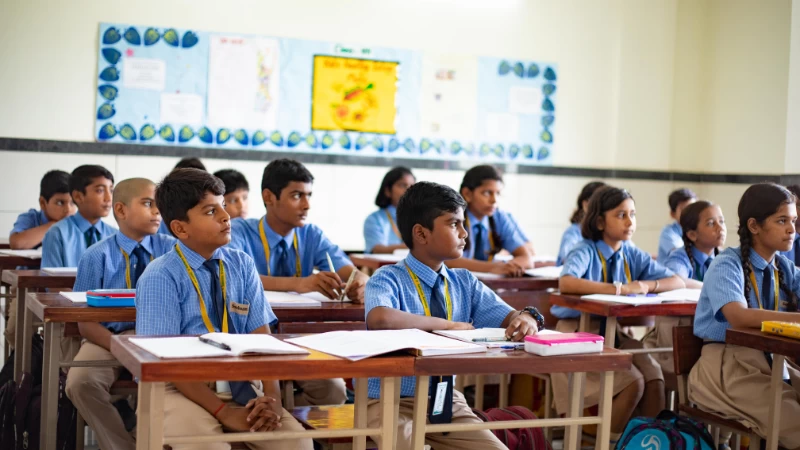
Classroom learning is the traditional method of education where students attend school and learn directly from teachers. It gives students a fixed routine and a proper environment for study.
In a classroom, students can ask questions, take part in discussions, work with classmates, and receive immediate guidance from their teachers. School also gives children opportunities to participate in sports, cultural activities, competitions, projects, and other activities.
For school-going children, these experiences are important because education is not only about textbooks and examinations. It is also about learning how to communicate, work with others, follow a routine, and become responsible.
Online Learning vs Classroom Learning: Flexibility and Routine
Online learning is more flexible. Students can study from almost anywhere and can often revisit recorded lessons or study materials.
Classroom learning follows a fixed timetable. Although this may seem less flexible, it helps children develop a daily routine. Going to school regularly teaches students the importance of punctuality, discipline, and time management.
For younger students especially, a regular school routine can make it easier to stay focused on studies.
Teacher Support and Personal Attention
One of the biggest strengths of classroom learning is direct communication between teachers and students.
In a classroom, a teacher can notice when a student is confused, struggling with a topic, or losing concentration. Students can raise their hands and ask questions immediately. Teachers can also explain the same topic in a different way when a student needs more help.
Online classes can provide teacher support as well, but face-to-face interaction is usually more natural in a physical classroom.
Social Skills and Interaction
School plays an important role in developing a child's social skills.
Classroom learning gives students the opportunity to make friends, participate in group activities, work on projects, share ideas, and communicate with people of different backgrounds. These daily interactions help children become more confident and comfortable in social situations.
Online learning may offer chat groups and online discussions, but it cannot always provide the same experience as being physically present with classmates.
Learning Through Activities and Practical Experience
Children often understand concepts better when they can see, discuss, and practise them.
Classrooms allow teachers to conduct experiments, activities, demonstrations, group projects, and practical lessons. Students can learn by doing rather than only reading or watching a lesson.
Online learning provides useful videos, quizzes, presentations, and other study resources. These can be excellent for revision and additional learning, but some practical experiences are difficult to replace at home.
Motivation and Concentration
Staying focused is another important difference between online learning and classroom learning.
In school, students follow a timetable and study alongside their classmates. Teachers regularly monitor their progress, which can encourage students to stay focused.
Online learning requires greater self-discipline. A student may start a lesson but become distracted by social media, games, messages, or other activities at home.
For this reason, classroom learning can be especially helpful for students who need regular guidance and a structured environment.
Can Online Learning and Classroom Learning Work Together?
Yes. Online learning does not necessarily have to compete with classroom education.
Online resources can be useful for revising a difficult lesson, practising questions, watching an educational video, or learning something beyond the school textbook.
A student can attend school regularly and use online resources at home for additional practice. This combination can make learning more interesting and useful when used in the right way.
The important thing is that online learning should support a student's education rather than completely replace the benefits of school life.
How Sunbeam Academy Supports Complete Learning
At Sunbeam Academy, education goes beyond classroom lessons and textbooks. The school focuses on creating a learning environment where students can develop academically, socially, and personally.
Teachers guide students through their lessons, encourage questions, conduct activities, and provide regular academic support. Students also get opportunities to participate in sports, cultural programmes, creative activities, competitions, and other co-curricular activities.
This balanced approach helps children build confidence, communication skills, discipline, teamwork, and a positive attitude towards learning.
For parents looking for a CBSE school in Varanasi, it is important to consider not only academic performance but also the school's learning environment, teacher support, safety, activities, and overall development opportunities.
Other Well-Known CBSE Schools in Varanasi
Varanasi has several established schools offering CBSE education. Parents may also consider schools such as Delhi Public School Varanasi, Sunbeam School Bhagwanpur, Sant Atulanand Convent School, The Aryan International School, Little Flower House, Rajghat Besant School, Kendriya Vidyalaya BHU, and Mukularanyam English School.
While choosing a school, parents should look at factors such as teaching quality, academic support, infrastructure, student safety, extracurricular activities, location, and the overall environment provided to children.
Online Learning vs Classroom Learning: Which Is Better?
There is no single answer for every student. Online learning is useful because it provides flexibility and access to additional study materials. Classroom learning, however, offers direct teacher guidance, regular routine, social interaction, practical activities, and opportunities for overall development.
For school students, classroom learning remains especially valuable because children need more than academic lessons. They need opportunities to communicate, play, participate, make friends, solve problems, and learn how to work with others.
The best approach is to make good use of online resources while keeping classroom education at the centre of a child's school journey.
Conclusion
The discussion around online learning vs classroom learning is not really about choosing one method and completely rejecting the other. Both have their place in modern education.
Online learning can make revision and additional study easier, while classroom learning provides the structure, personal guidance, social interaction, and practical experiences that are essential for school students.
For parents, the most important thing is to choose a school that provides children with a safe, supportive, and engaging environment where they can learn and grow with confidence. With the right guidance and regular support, students can make the most of both classroom education and useful online learning resources.
Frequently Asked Questions (FAQs)
1. Is online learning better than classroom learning?
Both have their benefits. Online learning offers flexibility, while classroom learning provides direct teacher guidance, routine, social interaction, and practical activities.
2. What are the main benefits of classroom learning?
Classroom learning helps students interact with teachers and classmates, develop social skills, follow a regular routine, and participate in practical and co-curricular activities.
3. Is online learning useful for school students?
Yes. Online learning can be useful for revision, additional practice, educational videos, and understanding difficult topics. It works best when used along with regular school education.
4. Why is classroom learning important for children?
Classroom learning supports both academic and personal development. Students learn communication, teamwork, discipline, responsibility, and other important life skills through everyday school experiences.
5. What should parents consider when choosing a CBSE school in Varanasi?
Parents should consider teaching quality, academic support, safety, infrastructure, extracurricular activities, teacher-student interaction, location, and the overall learning environment.