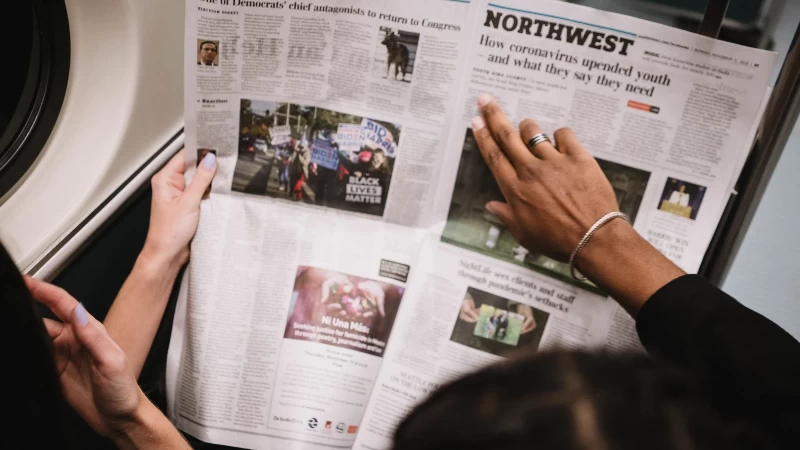
Students spend a big part of their day with textbooks. Books are important, but the world outside the classroom keeps changing every single day. New discoveries are made, new laws are passed, new records are broken. A newspaper brings all of this to your doorstep. Building a newspaper reading habit is one of the easiest and cheapest ways for a child to learn more, think better and feel more confident.
At Sunbeam Academy, we encourage students to look beyond the syllabus. Let us look at why reading the newspaper matters and how your child can start.
Why Is Newspaper Reading Important for Students?
Textbooks teach us the basics. Newspapers show us how those basics play out in real life. When a student reads about a science mission, a new government scheme or a cricket match, they connect what they learn in class with what is happening around them.
Regular reading also makes children curious. They begin to ask questions, share opinions and feel more comfortable talking about topics that are not in their books.
Top 10 Benefits of Reading Newspaper for Students
1. Improves General Knowledge and Current Affairs
Newspapers cover national and world events, government plans, discoveries, sports, business and social issues. Reading them often keeps students well informed and builds strong general knowledge.
2. Builds Vocabulary and Language Skills
Well-written articles bring new words, phrases and sentence styles. The best part is that students learn these words in context, so they understand how to use them. This is a natural way to improve vocabulary without cramming lists.
3. Develops Reading and Comprehension Skills
A news report asks the reader to find the main idea, notice the details and follow the order of events. With regular practice, reading speed and understanding both get better.
4. Enhances Critical Thinking
News stories often carry facts, opinions and different points of view. Students slowly learn to question what they read, compare viewpoints and tell the difference between plain reporting and personal opinion.
5. Improves Writing and Communication
Headlines, reports, interviews and editorials all show how ideas can be arranged clearly. Students who read them often write better essays and speak more clearly in class discussions.
6. Broadens Knowledge Beyond the Classroom
Newspapers introduce topics that may not be in the textbook, such as climate change, technology, public health, culture and the economy. This widens a child's view of the world.
7. Helps with Competitive Exam Preparation
Current affairs and general awareness are part of many entrance and competitive exams. Students who read a reliable newspaper regularly find it easier to remember events and answer knowledge-based questions.
8. Develops Social and Civic Awareness
By reading about elections, laws, public services and local issues, students understand how their community and country work. This helps them grow into responsible and thoughtful citizens.
9. Improves Focus and Reading Habits
Reading a full article needs patience and attention, unlike scrolling through short posts on a phone. A few quiet minutes with a newspaper each day can make a child a better, more focused reader.
10. Encourages Independent Thinking
When students read different reports and views, they begin to form their own opinions. They learn to give reasons for what they believe instead of just repeating what others say.
How Newspaper Reading Supports Academic Performance
Reading the newspaper can help in many school subjects, including English, Social Science, Economics, Science and Environmental Studies. Students come across real examples of ideas taught in class, which makes lessons easier to understand and remember. A chapter on pollution feels very different after reading a news story about air quality in a city. This link between lessons and real events makes learning more meaningful.
Which Sections of a Newspaper Should Students Read?
Students do not need to read every page. Picking a few sections makes the habit easier to keep.
- National and International News: Helps students understand big events in the country and across the world.
- Science and Technology: Covers discoveries, space missions, health news and new inventions.
- Education and Career: Shares news about exams, courses, scholarships and career choices.
- Sports: Makes reading fun while teaching students about tournaments, records and achievements.
- Editorials and Opinion Articles: Older students can read selected pieces to see different viewpoints and learn how writers build an argument. Younger children can read these with a parent or teacher.
How to Develop a Daily Newspaper Reading Habit
Nobody needs to begin with an hour of reading. Even 15 to 20 minutes a day, done regularly, can make a real difference.
Fix a Reading Time
Choose a time that suits your routine, such as before school, after breakfast or in the evening. A set time makes the habit stick.
Start with What You Enjoy
A child who loves football can begin with the sports page. Another who loves gadgets can start with technology. Enjoyable topics slowly lead to wider reading.
Note Down New Words and Facts
Keep a small notebook for new words, important people, big events and interesting facts. A quick look at these notes now and then helps them stay in memory.
Talk About What You Read
Sharing a story with parents, teachers or friends helps a child understand it better and builds the confidence to express opinions.
Newspaper vs Digital News: Which Is Better for Students?
Both have their good points. A printed newspaper has fewer distractions and encourages focused reading. Digital news is quick, easy to carry and updated all day. The choice matters less than the source. Students should stick to trusted news sources and avoid depending only on social media, where information can be incomplete or wrong.
Simple Tips for Reading the Newspaper Effectively
- Read the headlines first and pick two or three stories that look useful.
- Look up new words instead of skipping them.
- Try to find the main idea of each article.
- Compare reports from trusted sources when a topic is important.
- Do not spend too much time on sensational or unimportant stories.
- Discuss big stories with teachers, parents or classmates.
- Keep short notes on important current affairs.
Newspaper reading should never feel like extra homework. When children start with topics they like and slowly widen their interests, the habit becomes both useful and enjoyable.
Building Reading Habits at Sunbeam Academy
At Sunbeam Academy, we want every child to enjoy learning beyond the textbook. Our teachers encourage students to read age-appropriate news, talk about important events, listen to different views and connect what they study with the world around them. This helps children become more aware, confident and thoughtful.
If you would like to know how we help students grow, we would love to hear from you. Contact Sunbeam Academy to learn more about admissions and our learning approach.
Conclusion
A daily newspaper is one of the simplest ways for a student to learn outside the classroom. It builds vocabulary, understanding, writing, clear thinking and general awareness, and it helps with school studies and competitive exams too. The habit works best when students read a few sections they like, choose trusted sources, note down key points and talk about what they learn.
The goal is not to read more news but to understand it well. With a little time each day, newspaper reading can help children grow into informed, confident and curious learners.
Frequently Asked Questions
Why is newspaper reading important for students?
It helps students connect classroom lessons with real events, improves vocabulary and understanding, and builds curiosity about the world.
How much time should a student spend reading the newspaper?
Around 15 to 20 minutes a day is enough to start. Regular reading matters more than long reading.
Which newspaper sections are best for students?
National and world news, science and technology, education and career, and sports are good places to begin. Older students can add editorials.
Is digital news as good as a printed newspaper?
Yes, as long as the source is reliable. Print has fewer distractions, while digital news is quicker and easier to access.